3D Laser Scanning vs Traditional Surveying: Which is Better?
The surveying industry has transformed dramatically with the introduction of 3D laser scanning technology. But is it really better than traditional hand-measured surveys? In this comprehensive comparison, we examine both methods to help you choose the right approach for your measured building survey project.
If you're planning a renovation, extension, or need accurate building drawings, understanding the difference between these surveying methods could save you time, money, and prevent costly mistakes. Let's dive into the details.
What is Traditional Surveying?
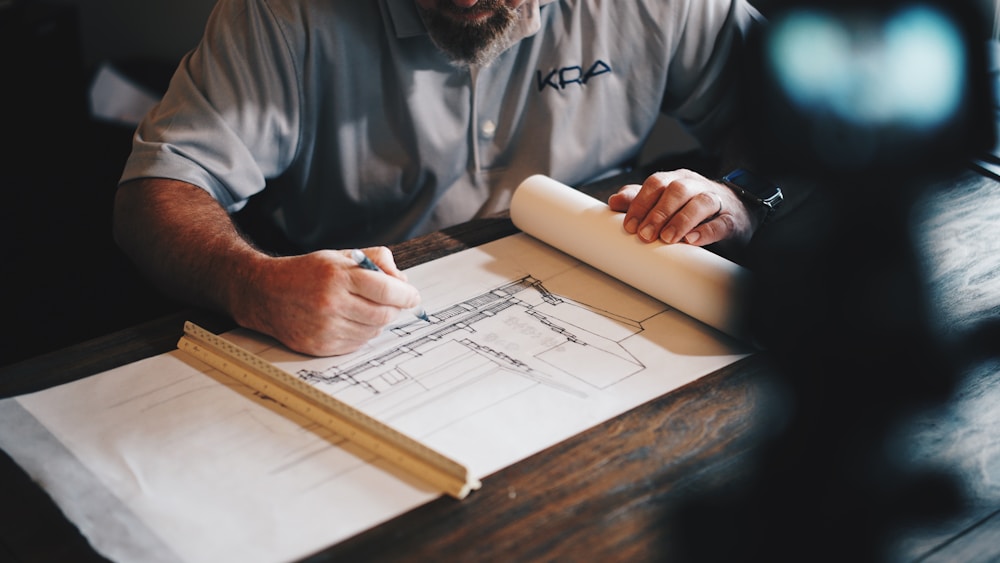
Traditional measured surveys, sometimes called hand-measured surveys, involve surveyors physically measuring buildings using tape measures, laser distance meters, and other handheld tools. This method has been the industry standard for decades.
How Traditional Surveys Work
A surveyor visits your property with basic measuring equipment. They systematically measure room dimensions, wall lengths, ceiling heights, window positions, and other features. As they work, they sketch the building layout on paper or a tablet, recording measurements manually.
Back in the office, these hand-drawn sketches and measurements are used to create CAD (Computer-Aided Design) drawings showing floor plans, elevations, and sections.
Traditional Survey Equipment
- Tape Measures: For basic linear measurements
- Laser Distance Meters: Electronic devices measuring distances up to 100 meters
- Spirit Levels: Checking if surfaces are level or plumb
- Measuring Wheels: For longer distances
- Clipboards and Sketch Pads: Recording measurements and layouts
What is 3D Laser Scanning?
3D laser scanning is an advanced technology that uses laser beams to capture millions of precise measurements in minutes. The scanner rotates 360 degrees, measuring distances to every visible surface, creating a detailed "point cloud" of millions of measured points.
How 3D Laser Scanning Works
A surveyor positions a tripod-mounted laser scanner in your building. The device emits rapid laser pulses that bounce off walls, floors, ceilings, and objects, measuring the time it takes for each pulse to return. This data creates a highly accurate 3D point cloud.
Multiple scans from different positions are combined to capture the entire building. The resulting point cloud contains millions of measured points with millimetre-level accuracy, creating a complete 3D digital record of your property.
3D Laser Scanning Equipment
- FARO Focus Scanners: Industry-leading laser scanning technology
- Leica RTC360: High-speed 3D reality capture
- Trimble Scanners: Professional-grade survey equipment
- Processing Software: Specialized software for point cloud management
- High-Resolution Cameras: Capturing detailed imagery alongside measurements
Accuracy Comparison
Accuracy is perhaps the most critical difference between these surveying methods. Let's compare the precision each method achieves:
Traditional Survey Accuracy
Hand-measured surveys typically achieve ±10-20mm accuracy for most measurements. This accuracy depends heavily on:
- Surveyor skill and experience
- Building complexity and accessibility
- Measuring conditions (light, temperature, obstructions)
- Equipment quality and calibration
- Time pressure and fatigue
While ±10-20mm sounds precise, it can accumulate across a building. In a 10-meter wall, this could mean up to 20mm error at each end – potentially 40mm total discrepancy. For most residential projects, this is acceptable. For complex commercial buildings or tight-tolerance renovations, it may cause problems.
3D Laser Scanning Accuracy
Modern laser scanners achieve ±2-5mm accuracy across entire buildings. This superior precision comes from:
- Automated measurement reducing human error
- Millions of measurement points providing redundancy
- Calibrated, professional-grade equipment
- Digital processing eliminating transcription errors
- Consistent accuracy regardless of conditions
This level of accuracy is crucial for projects requiring precise measurements: structural analysis, BIM coordination, heritage documentation, and high-value developments where accuracy is paramount.

Speed and Efficiency
Time is money in construction and development. How do these methods compare for survey speed?
Traditional Survey Time
A typical three-bedroom house requires:
- Site Time: 4-6 hours measuring on site
- Office Time: 8-12 hours creating CAD drawings
- Total Project Time: 2-3 working days
Larger commercial buildings can take several days on site and weeks to process into final drawings. Multiple return visits are often needed to capture missed details or resolve measurement discrepancies.
3D Laser Scanning Time
The same three-bedroom house with laser scanning requires:
- Site Time: 1-2 hours scanning
- Processing Time: 2-3 hours registering scans
- Drawing Time: 6-8 hours creating CAD from point cloud
- Total Project Time: 2-3 working days (but less site disruption)
The key advantage is dramatically reduced site time. Less time on site means less disruption to occupants, lower costs for site access, and the ability to survey multiple locations in one day.
For large commercial buildings, laser scanning can reduce site time from weeks to days, delivering massive efficiency gains for complex projects.
Cost Comparison
Cost is often the deciding factor when choosing a surveying method. Let's break down the economics:
Traditional Survey Costs
Traditional surveys cost approximately:
- Small Residential: £400-£800
- Medium Residential: £800-£1,500
- Large Residential: £1,500-£3,000
- Commercial: £2,000-£8,000+
Lower upfront costs make traditional surveys attractive for small, simple projects with modest budgets.
3D Laser Scanning Costs
Laser scanning typically costs:
- Small Residential: £500-£1,000
- Medium Residential: £1,000-£2,000
- Large Residential: £2,000-£4,000
- Commercial: £3,000-£12,000+
While initially more expensive, laser scanning often provides better value when you consider:
- Superior accuracy reducing construction errors
- Comprehensive data eliminating return visits
- Faster project timelines saving time
- Permanent 3D record for future use
- Reduced site disruption costs
For complex or high-value projects, the additional investment in laser scanning pays for itself through error prevention and efficiency gains.
Detail and Comprehensiveness
The level of detail captured differs significantly between methods.
Traditional Survey Detail
Traditional surveys capture what the surveyor measures and records. This includes:
- Basic room dimensions
- Wall locations and thicknesses
- Door and window positions
- Ceiling heights
- Main architectural features
Details can be missed, especially in complex areas, high locations, or cluttered spaces. If the architect later needs additional information, a return visit may be necessary.
3D Laser Scanning Detail
Laser scanning captures everything visible to the scanner, including:
- Every architectural detail and feature
- Surface textures and materials
- Structural elements and services
- Irregular shapes and complex geometry
- Hard-to-reach areas and ceiling details
The point cloud serves as a permanent digital record. If additional measurements are needed later, they can often be extracted from the existing scan data without returning to site – saving time and cost.
Best Applications for Each Method
Both methods have situations where they excel. Choosing the right approach depends on your specific project needs.
When Traditional Surveying Works Best
Consider traditional surveying for:
- Simple Buildings: Straightforward rectangular layouts with few complications
- Very Small Projects: Single rooms or small residential properties
- Tight Budgets: Projects where cost is the primary concern
- Basic Requirements: When simple floor plans are sufficient
- Accessible Spaces: Easy-to-measure buildings without obstructions
When 3D Laser Scanning is Essential
Laser scanning is the clear choice for:
- Complex Buildings: Irregular layouts, curved walls, complex geometry
- Heritage Buildings: Listed buildings requiring non-intrusive documentation
- Large Structures: Commercial buildings, industrial facilities, multi-story developments
- BIM Projects: Projects requiring 3D models and scan to BIM workflows
- Occupied Buildings: Minimal disruption needed for business continuity
- Tight Tolerances: Projects requiring exceptional accuracy (structural work, fit-outs)
- Challenging Access: High ceilings, hazardous areas, hard-to-reach locations
- Comprehensive Documentation: Permanent 3D records for asset management
Technology Limitations
No technology is perfect. Understanding limitations helps set realistic expectations.
Traditional Survey Limitations
- Human error in measurement and recording
- Difficulty measuring high or inaccessible areas
- Time-consuming for complex buildings
- Lower accuracy than laser scanning
- Details can be missed or overlooked
- Disruptive to occupants during extended site time
3D Laser Scanning Limitations
- Cannot scan through walls or closed doors
- Reflective surfaces (glass, mirrors) can cause issues
- Requires line of sight to surfaces
- Higher initial equipment investment
- Requires specialized training and expertise
- Large data files requiring powerful computers

The Future of Surveying
The surveying industry is rapidly adopting 3D laser scanning as the new standard. Several trends are driving this shift:
Industry Trends
- BIM Adoption: Building Information Modelling requires 3D data that laser scanning provides naturally
- Technology Costs Falling: Scanner prices decreasing making technology more accessible
- Client Expectations: Clients increasingly expect laser scanning accuracy and detail
- Regulatory Requirements: Some projects mandate laser scanning accuracy levels
- Integration with Other Technologies: Drones, mobile scanning, and AI processing enhance capabilities
While traditional surveying will remain relevant for certain applications, 3D laser scanning is becoming the industry standard for professional measured building surveys.
Making Your Decision
Choosing between traditional surveying and 3D laser scanning depends on several factors:
Questions to Ask
- What accuracy do you need? Structural work requires laser scanning precision
- How complex is your building? Complex buildings benefit enormously from laser scanning
- What's your timeline? Laser scanning reduces site time significantly
- What's your budget? Consider long-term value, not just upfront cost
- Do you need BIM? Laser scanning integrates seamlessly with BIM workflows
- Will you need the data later? Point clouds provide permanent reference
Expert Recommendation
For most projects in 2024, we recommend 3D laser scanning. The superior accuracy, comprehensive data capture, and time savings outweigh the modest cost premium. Only for the simplest, smallest projects might traditional surveying be more appropriate.
Conclusion: Which Method Wins?
There's no single "winner" – the best method depends on your specific needs. However, clear patterns emerge:
Choose Traditional Surveying if: You have a simple, small building, basic requirements, and minimal budget.
Choose 3D Laser Scanning if: You need accuracy, have a complex building, require comprehensive data, need BIM, want minimal disruption, or are working on a high-value project.
The surveying industry's trajectory is clear: 3D laser scanning represents the future. As technology costs decrease and capabilities increase, laser scanning will become standard for all but the most basic surveys.
Get Expert Advice
UK Measured Survey uses advanced 3D laser scanning technology on all our projects, delivering superior accuracy and comprehensive data. Our RICS-accredited surveyors serve London, Birmingham, Manchester, and nationwide.
Contact us today for a free quote and expert advice on the right surveying approach for your project. We'll discuss your requirements and recommend the most suitable method based on your specific needs.